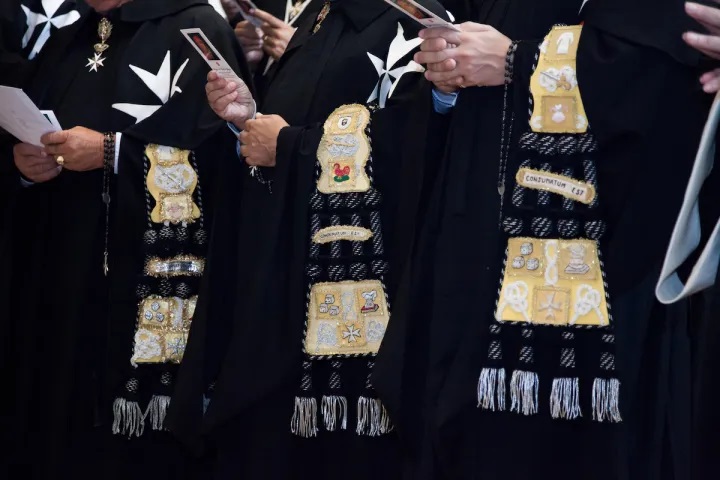
THE ORDER OF SAINT JOHN
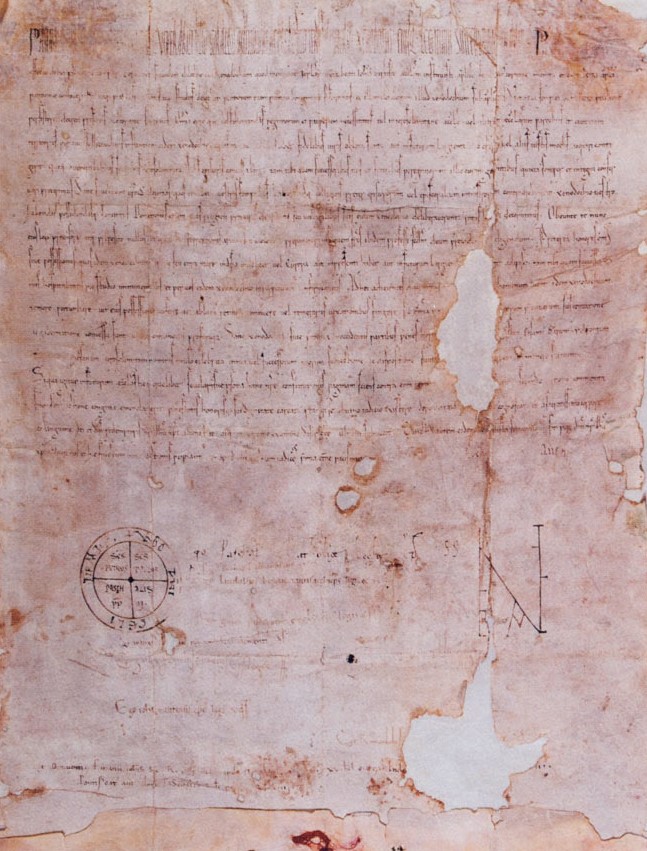
Above, official paper “Pie Postulatio Voluntatis”, issued on 15th day of february 1113 from Pope Pasquale II.
Foundation
In the 11th century the Knights of Malta, known then as 'Knights Hospitaller', established an hospital in Jerusalem to care pilgrims of any religious faith or origin. The work of the Hospitallers grew in fame and in 1113 Pope Paschal II officially recognised the monastic community as a lay religious order. The Pope identified Blessed Gerard as Order's founder, together with an established group of monks -- the 'Professed' -- who are still today the heart of the Order.
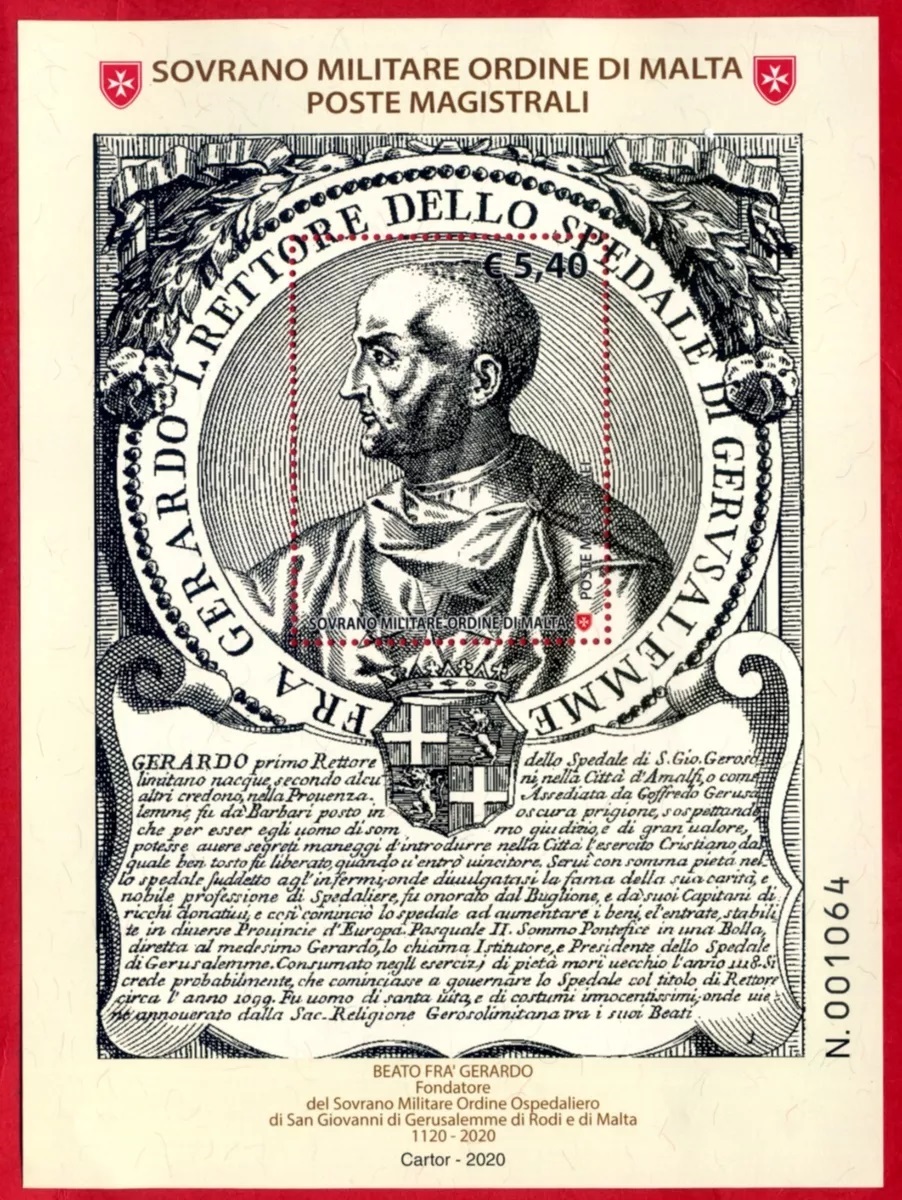
Above, from the left, Siege of Rhodes fifth centenary commemorative stamp and Blessed Gerard commemorative stamp (Sovereign Military Hospitaller Order of St John of Jerusalem of Rhodes and of Malta founder).
Order Structure
Throughout the centuries the number of members coming from all over Europe continued to grow and contributed to the strengthening of the Order during its presence in Rhodes (1310-1522) and in Malta (1530-1798). While members of the Order of Malta in former times traditionally belonged to the aristocracy, the emphasis today is on a nobility of spirit and conduct. The 13,500 Knights and Dames of the Order of Malta remain true to its inspiring principles, summarised in the motto "Tuitio Fidei et Obsequium Pauperum" -- nurturing, witnessing and protecting the faith and serving the poor and the sick. Members must demonstrate dedication to these principles and are admitted country-by-country through Priories and national Associations.
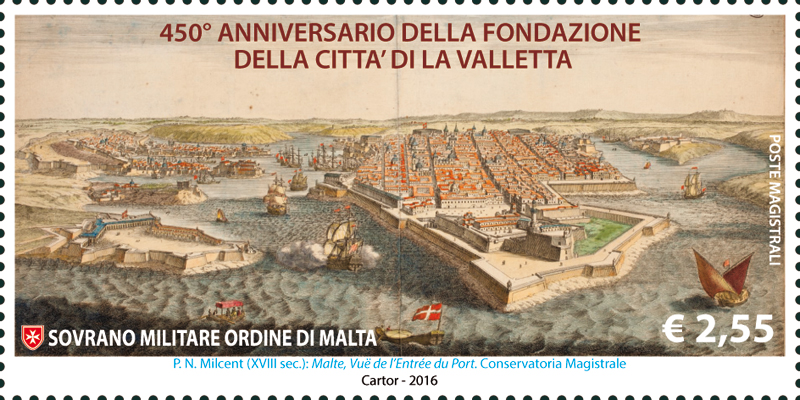
To the right, 450th anniversary commemorative stamp of the foundation of the City of La Valletta.
According to the Constitution, the members of the Order of Malta are divided into three Classes.
The members are to conduct their lives in an exemplary manner in conformity with the teachings and precepts of the Catholic Church and to devote themselves to the assistance activities of the Order.
The members of the First Class have made vows of "poverty, chastity and obedience aspiring to perfection according to the Gospel". They are religious according to Canon Law but are not obliged to live in community.
The members of the Second Class, by virtue of the Promise of Obedience, are committed to living according to Christian principles and the inspiring principles of the Order. The Third Class consists of lay members who do not profess religious vows or the Promise, but who live according to the principles of the Church and of the Order.